
Defining climate tech
Finding a useful way to categorize the different elements of the climate solutions universe

I decided in late 2022 that I would devote the next phase of my career to helping to address climate change. My sense of imminent catastrophe had been growing for some time, as our world careens towards a future where rising temperatures make much of what we take for granted in the modern world impossible. At the same time, my general optimism and love of innovative technology helped me to see a new world of possibilities, and a chance to make a real difference.

For most of my career I have been a software / AI tech founder, and my natural instinct is to look for opportunities for new businesses that might contribute. Given my interest in technology generally it made most sense to me to focus on what's coming to be known as 'climate tech'. But what exactly is climate tech? How does tech fit into the broad landscape of climate solutions?
Prior to founding my first company, I was a strategy consultant for several years. One of the first things consultants do when trying to understand a space is develop a 'segmentation': a way of framing a given space holistically and comprehensively, and grouping it into useful parts. So, in order to define climate tech and the climate ‘solution space’ for myself, I started by looking for existing segmentations. As with many aspects of climate change, I quickly realized that there is no shortage of insightful analysis by some very smart people, leading to a common problem in the climate change space — there are so many options that the range of choices can be paralyzing. I found many segmentations, all a little bit different, and all useful in different ways. Eventually, looking at the similarities and differences, and noticing what felt more useful to me, I came up with a way of defining climate tech that is helpful for me, and hopefully may be for others!
Below I’ll define what makes a segmentation useful, and then introduce some of the key ways to break down climate tech already out there. Finally, I’ll introduce my own approach.
Towards a useful segmentation
To choose the most useful way to define a segmentation of climate tech, the first question has to be: 'useful for what'?

My personal goal is to contribute to solutions with some level of quantifiable impact, so ability to quantify a segment is important for me. The ‘impact' of a climate change solution is one of three things:
Emissions that can be reduced
Carbon that can be removed from the atmosphere
Reduction in the potential cost of climate effects that can't be avoided
Climate change is a complex ‘systems problem’ touching almost all parts of society, and consequently climate tech is not confined to a single technology or industry. Changes in one part of the system can lead to significant changes in another. So another factor that feels important for me is thinking in terms of ‘goal-oriented themes’ - in other words, definitions that themselves suggest an outcome, and lend themselves to systems thinking. Many segmentations are defined based on end-use sector (eg 'built environment') in a way that somewhat hides who would do what, so to me it feels more useful to think in terms of a theme such as ‘electrify everything’ - a goal that touches multiple end-use sectors (buildings, transportation etc). There is nothing 'wrong' with either style - but I find themes are easier to think about and work with.
Some existing approaches
Let’s take a look at a few existing approaches to breaking down the different categories of climate solutions and climate tech. We’ll look at:
Sector-based approaches
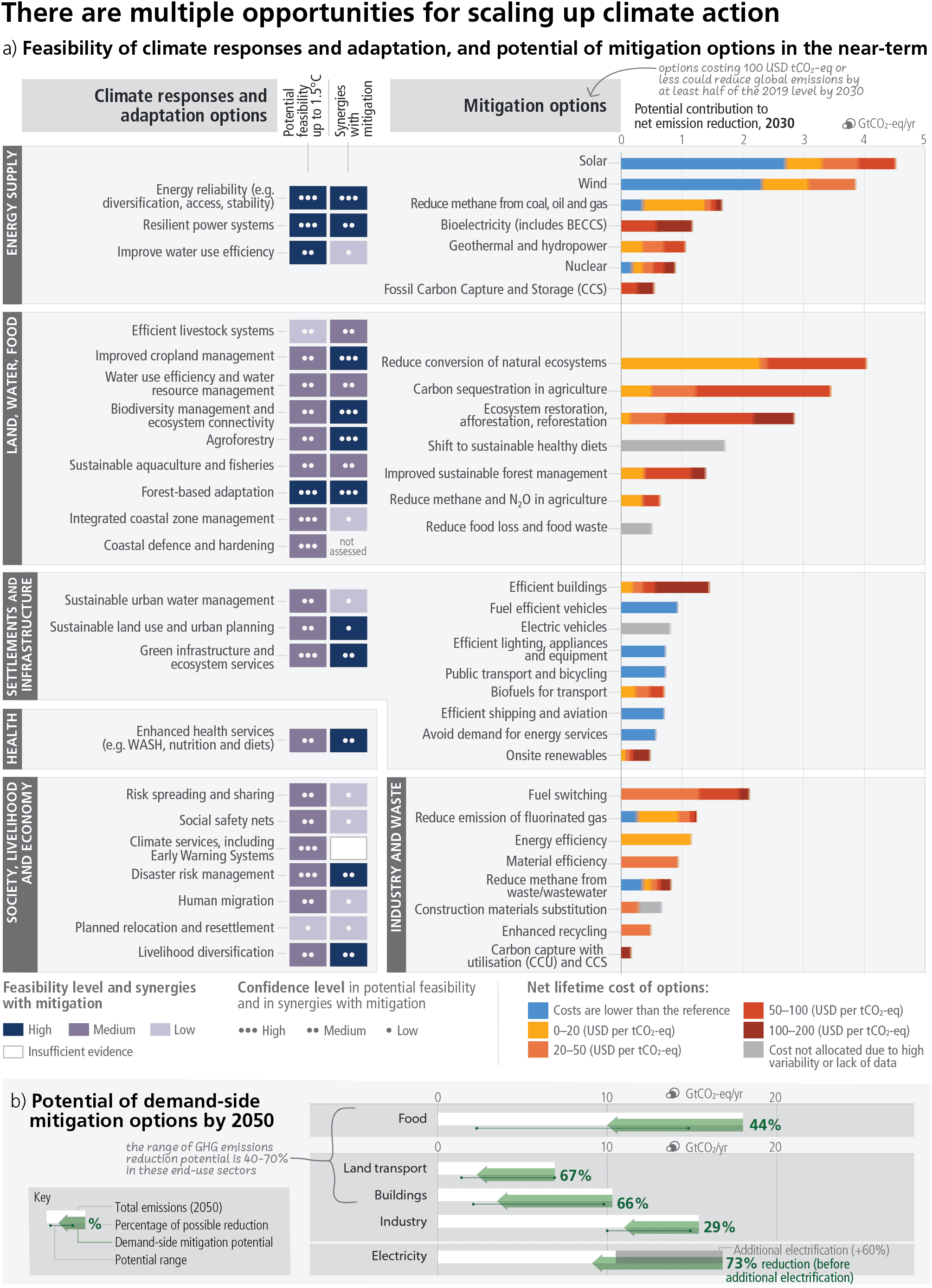
IPCC Opportunities for Scaling up Climate Action
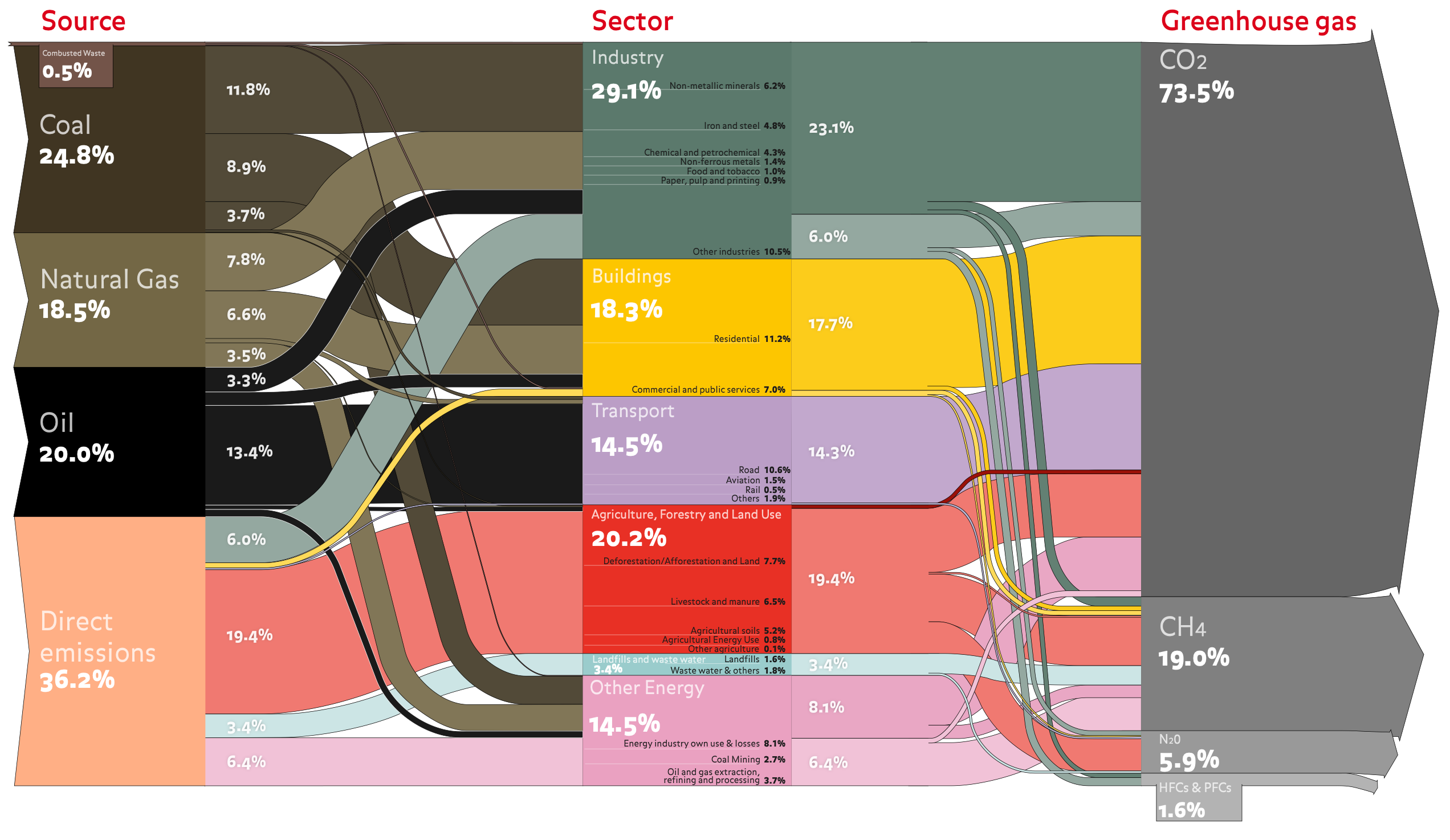
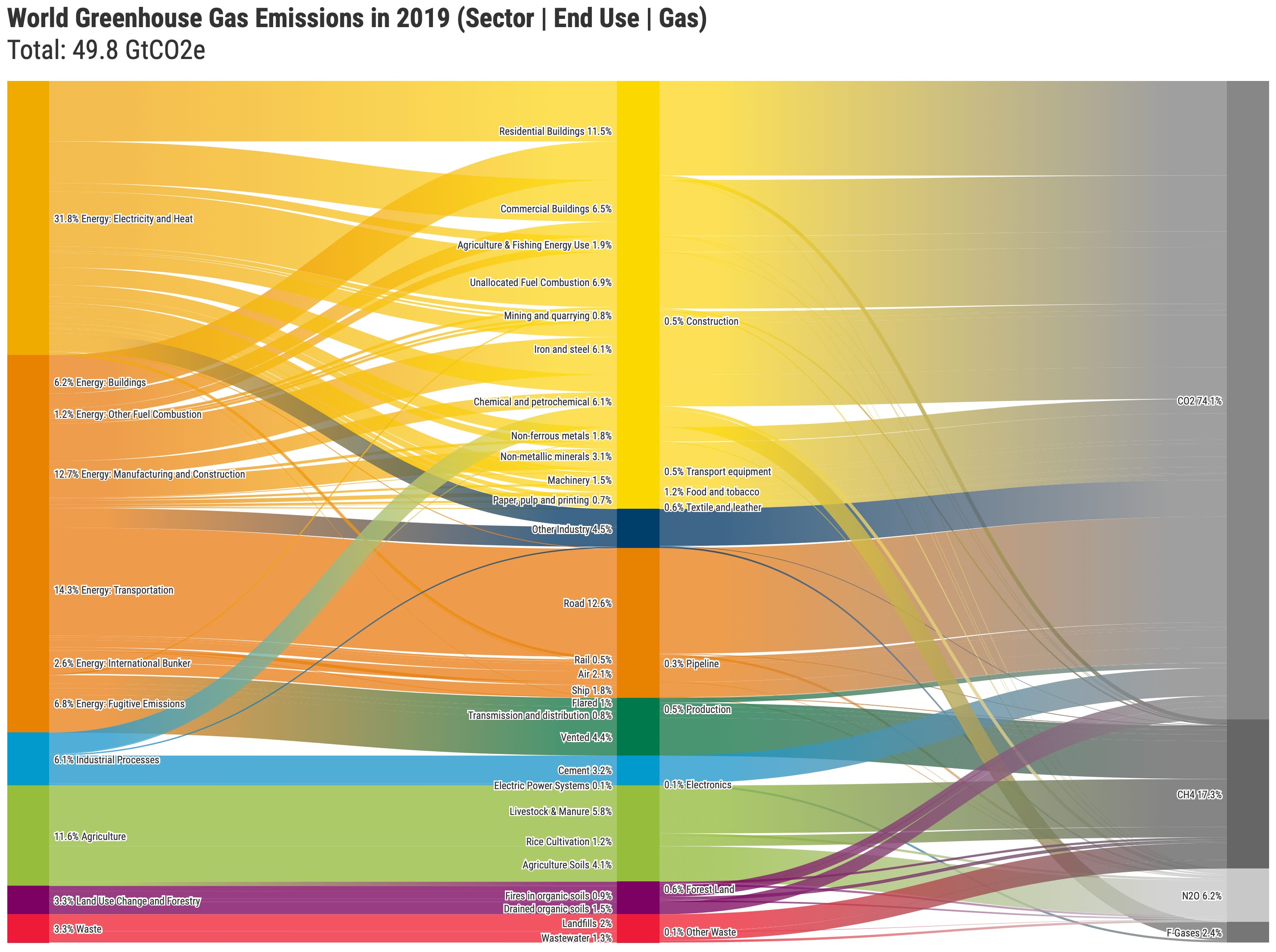
World GHG Emissions Sources and Uses
Project Drawdown
Climate-tech specific approaches
MCJ Climate Tech Map
HolonIQ Global Climate Tech Landscape
Climate Tech VC
Theme-based approaches
Nan Ransohoff: A mental model for combating climate change
Bill Gates: How to avoid a climate disaster
1a: IPCC Opportunities for Scaling up Climate Action
The Intergovernmental Panel on Climate Change (IPCC) Synthesis Report, published in March 2023, was a summary of all IPCC and findings in the ‘6th assessment cycle’ covering the past five years. It represents the most comprehensive collection of climate science available, collated from the work of hundreds of scientists from 195 countries.
Figure SPM.7 provides an excellent summary of the key opportunities, broken down into six sectors: energy supply, land / water / food, settlements / infrastructure, health, industry / waste, and society / livelihood / economy.
1b: World GHG Emissions Sources and Uses
In 2012, Ecofys (now part of Guidehouse) created a very useful chart showing how emission sources map to end-use sectors, and in turn to the actual GHGs (Greenhouse Gases) emitted.
In 2022, the World Resources Institute Climate Watch created something similar based on 2019 data, which maps sectors (here meaning emitting activities) to end-use industries, and then on to GHG. This version doesn’t include sources, however.
1c: Project Drawdown
Project Drawdown is a non-profit aiming to be the world’s leading resource for climate solutions, with detailed research and analysis to support a library of around 100 solutions. Drawdown uses a tiered structure - at the top level, the three key themes are (1) reduce sources, (2) support sinks, and (3) improve society. ‘Reduce sources’ is broken down into five sectors: electricity, food / agriculture / land use, industry, transport and buildings.
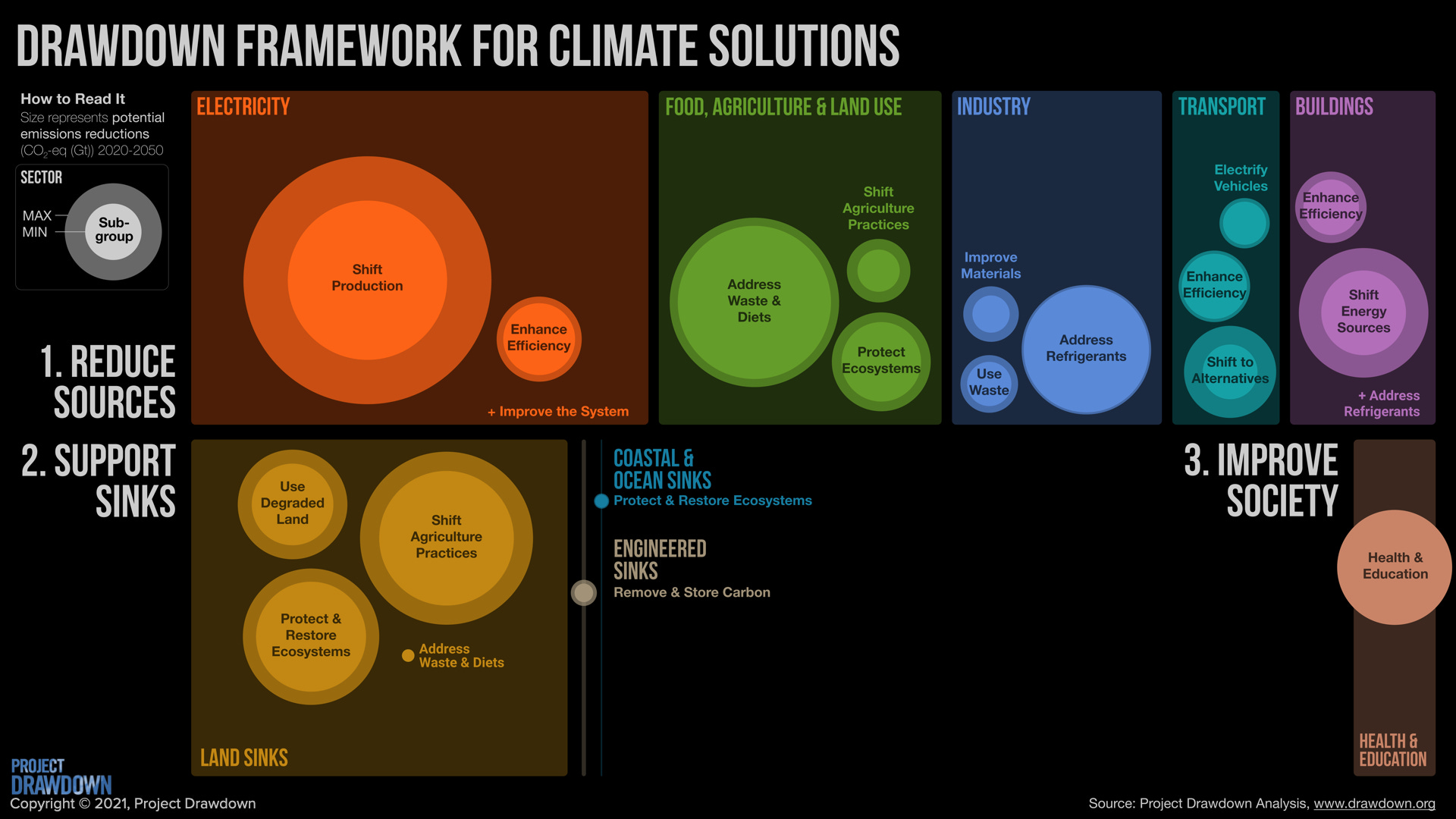
Here’s a link to the complete table of solutions.
2a: MCJ Climate Tech Map
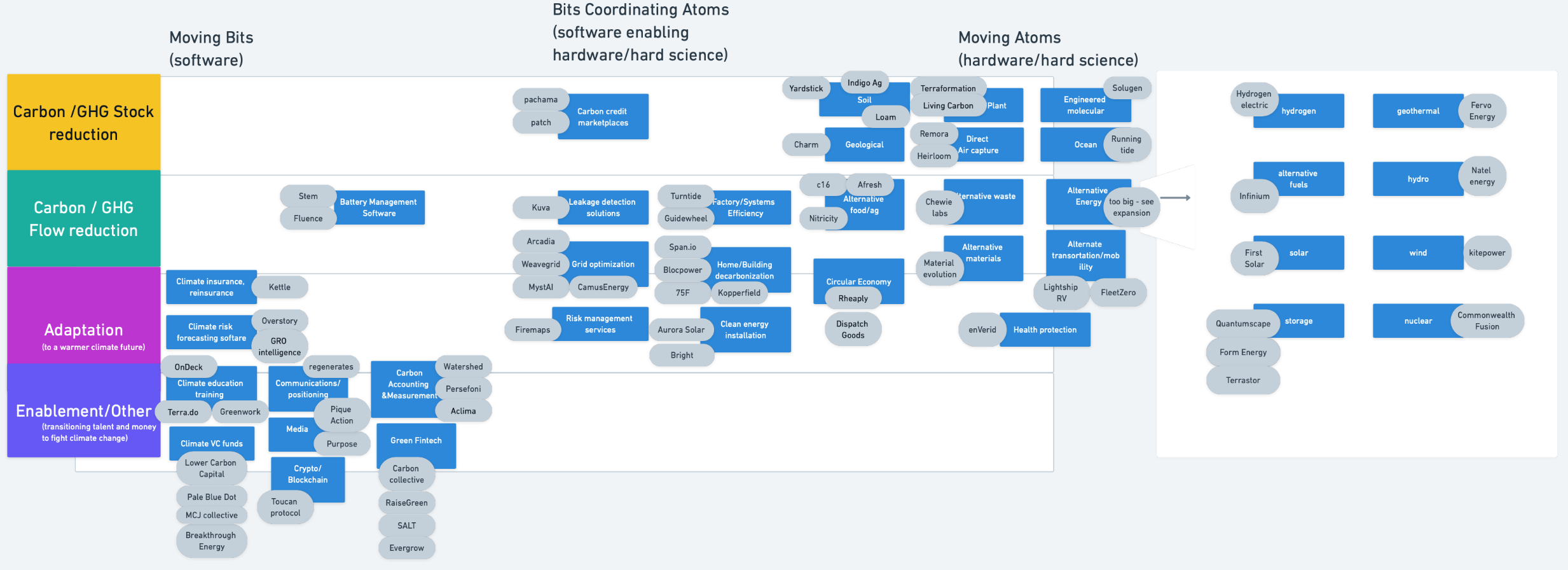
In 2022, a group of members of the MCJ (My Climate Journey) community put their heads together to create a framework designed specifically to help people transitioning from ‘traditional’ tech to climate tech. It provides a matrix approach, with ‘bits’ and ‘atoms’ as the horizontal axis (essentially software / hardware), and then ‘end goal’ as the vertical axis.
2b: HolonIQ Global Climate Tech Landscape
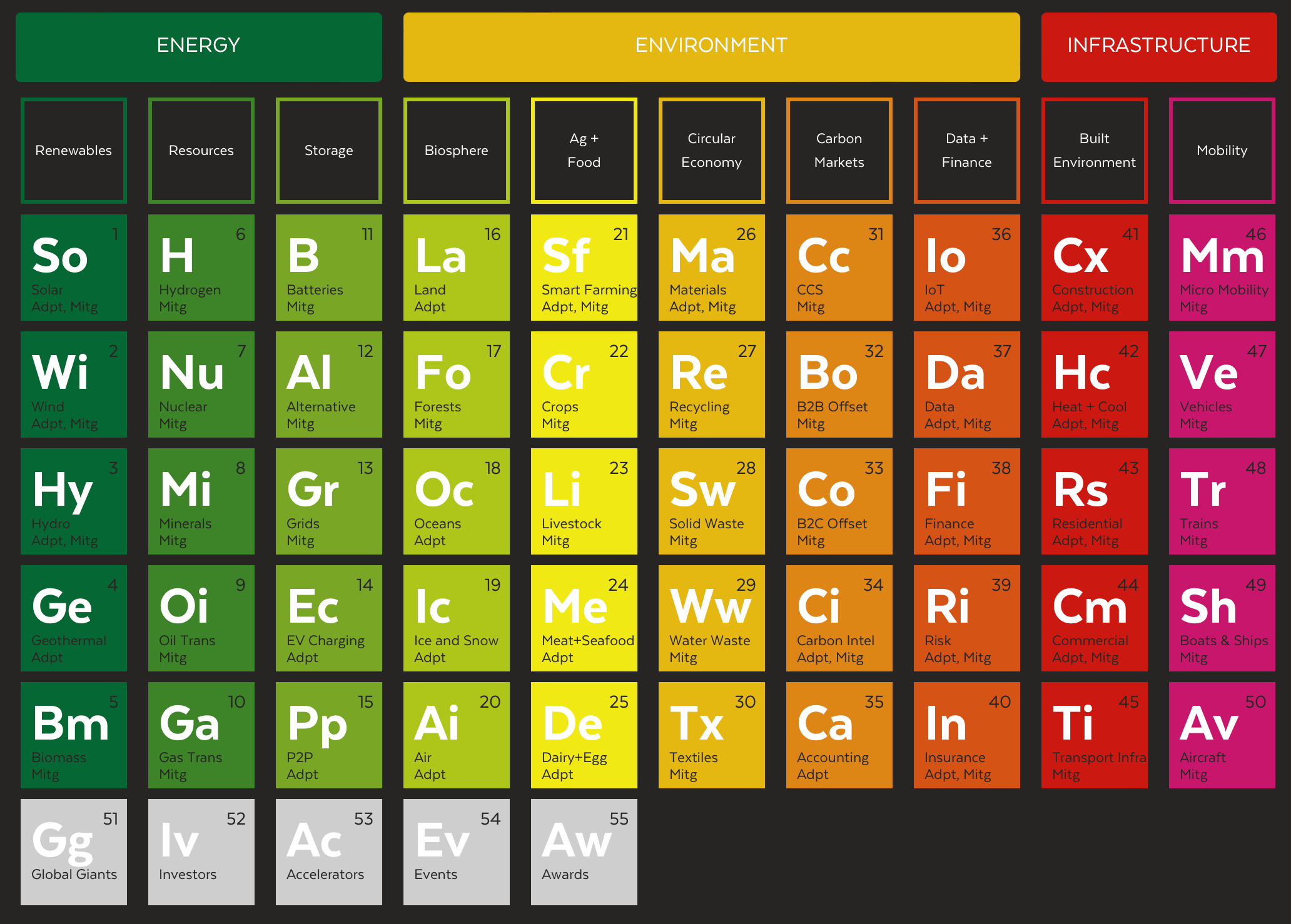
HolonIQ, a New York based ‘impact intelligence platform’, has created a very interesting (and colorful!) visualization of climate tech, starting with top level categories (energy / environment / infrastructure) and drilling down to 55 individual application areas.
2c: Climate Tech VC
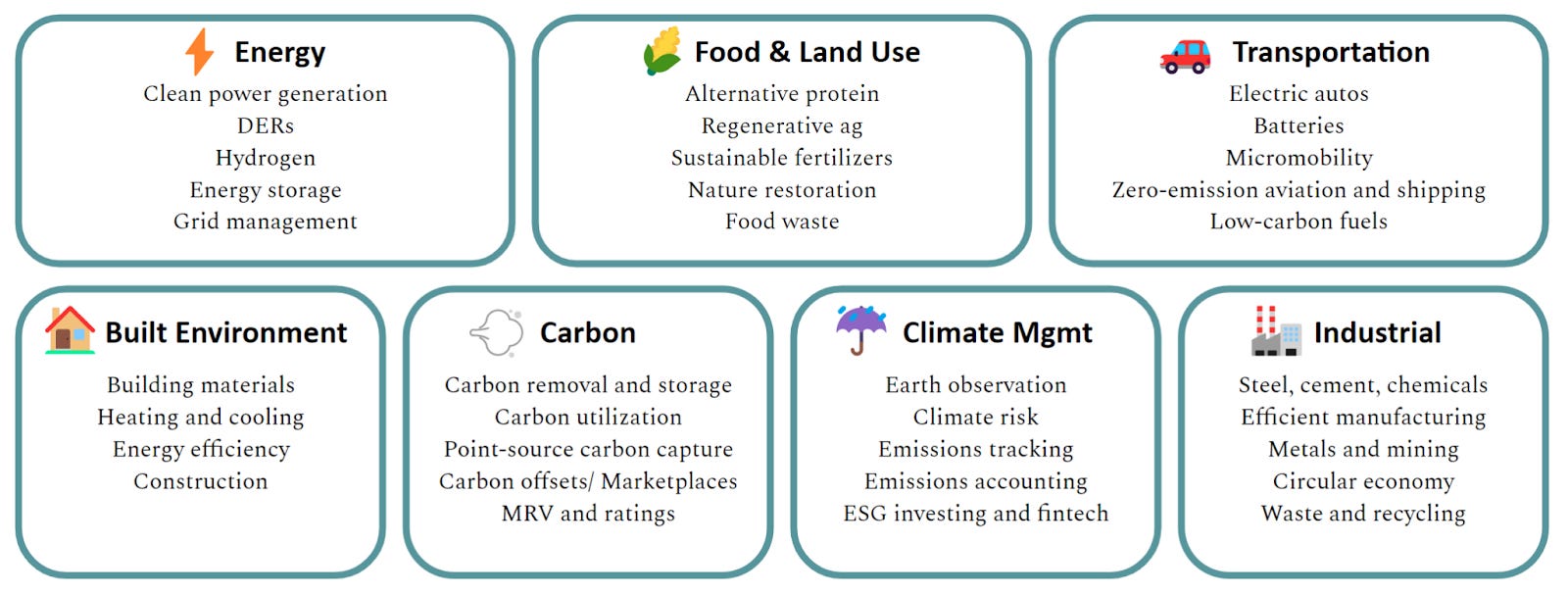
CTVC, the producers of a very well thought-through weekly deep dive into a climate tech topic, use a breakdown of seven key verticals (food & land use, energy, transportation, industry, climate management, built environment, and carbon capture), each of which is broken into multiple sub-sectors.
3a: Nan Ransohoff: A mental model for combating climate change
Nan is the Head of Climate at Stripe, as well as the leader and chief instigator of Frontier, one of the most innovative climate initiatives in the world: an advance commitment by climate-conscious companies to buy permanent carbon removal, helping to spur innovation in the CDR (Carbon Dioxide Removal) space by demonstrating a viable future market.
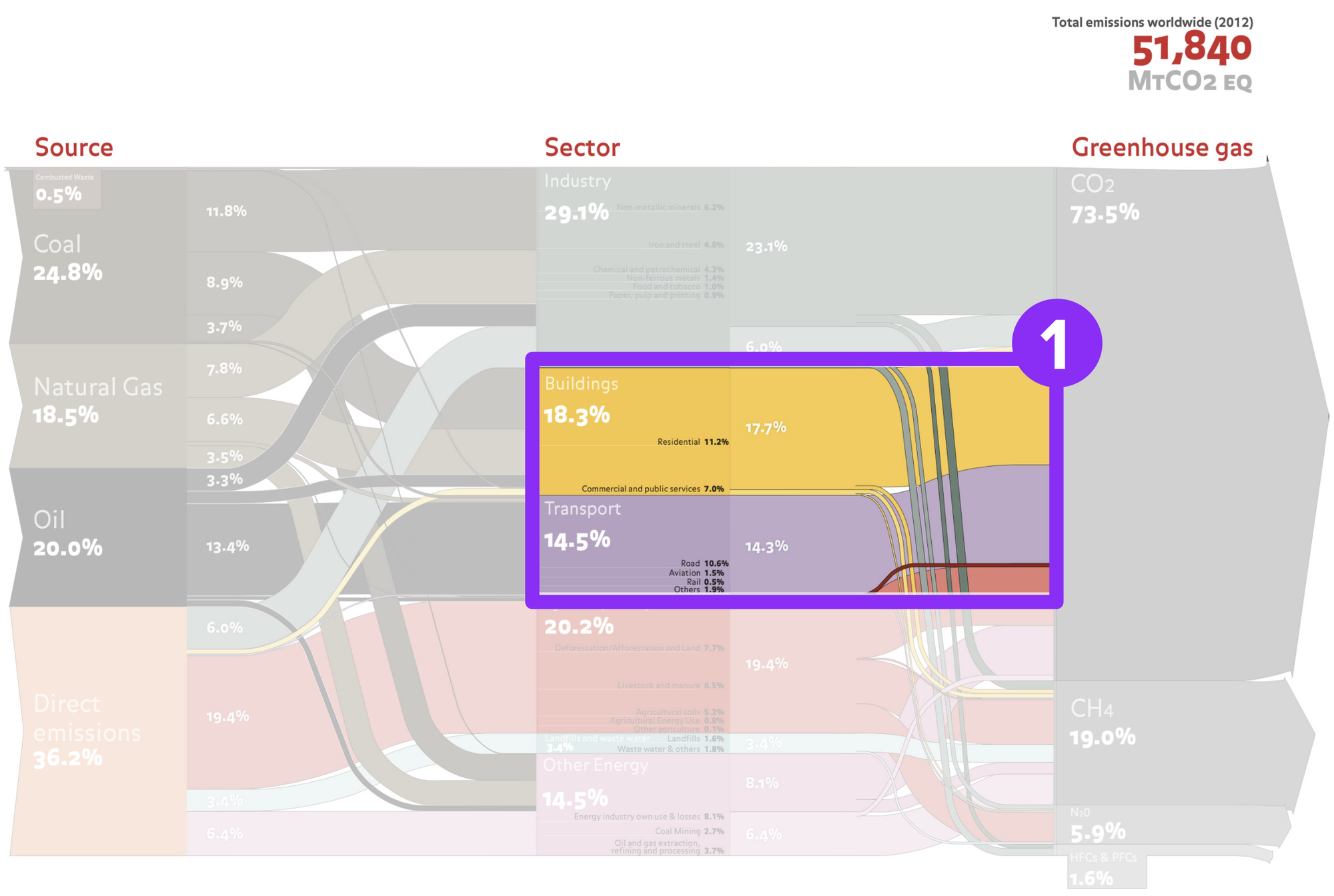
Nan’s article explains how addressing climate change boils down to two ‘levers’: reducing emissions (which she breaks down into six themes), and removing carbon. Her segmentation is thematic, and mapped directly to the 2012 World GHG Emissions Flow Chart for quantification and visualization (see above). For example, here’s how she illustrates the quantification of her ‘electrify devices that consume energy’ - by combining the emissions of buildings (heating, power usage by occupants etc) and transport (road, rail, shipping, aviation):
3b: Bill Gates: How to avoid a climate disaster
As well as being one of the most successful tech entrepreneurs in history, Bill Gates has gone on to make an enormous contribution to addressing climate change. His book, How to avoid a climate disaster, does an excellent job of distilling the key themes and the key solutions we need. The key themes he focuses on are:
How we make things (31% of emissions)
How we plug in (27% of emissions)
How we grow things (19% of emissions)
How we get around (16% of emissions)
How we keep cool and stay warm (7% of emissions)
Adapting to a warmer world

My climate tech segmentation
Without further ado, here’s my segmentation!
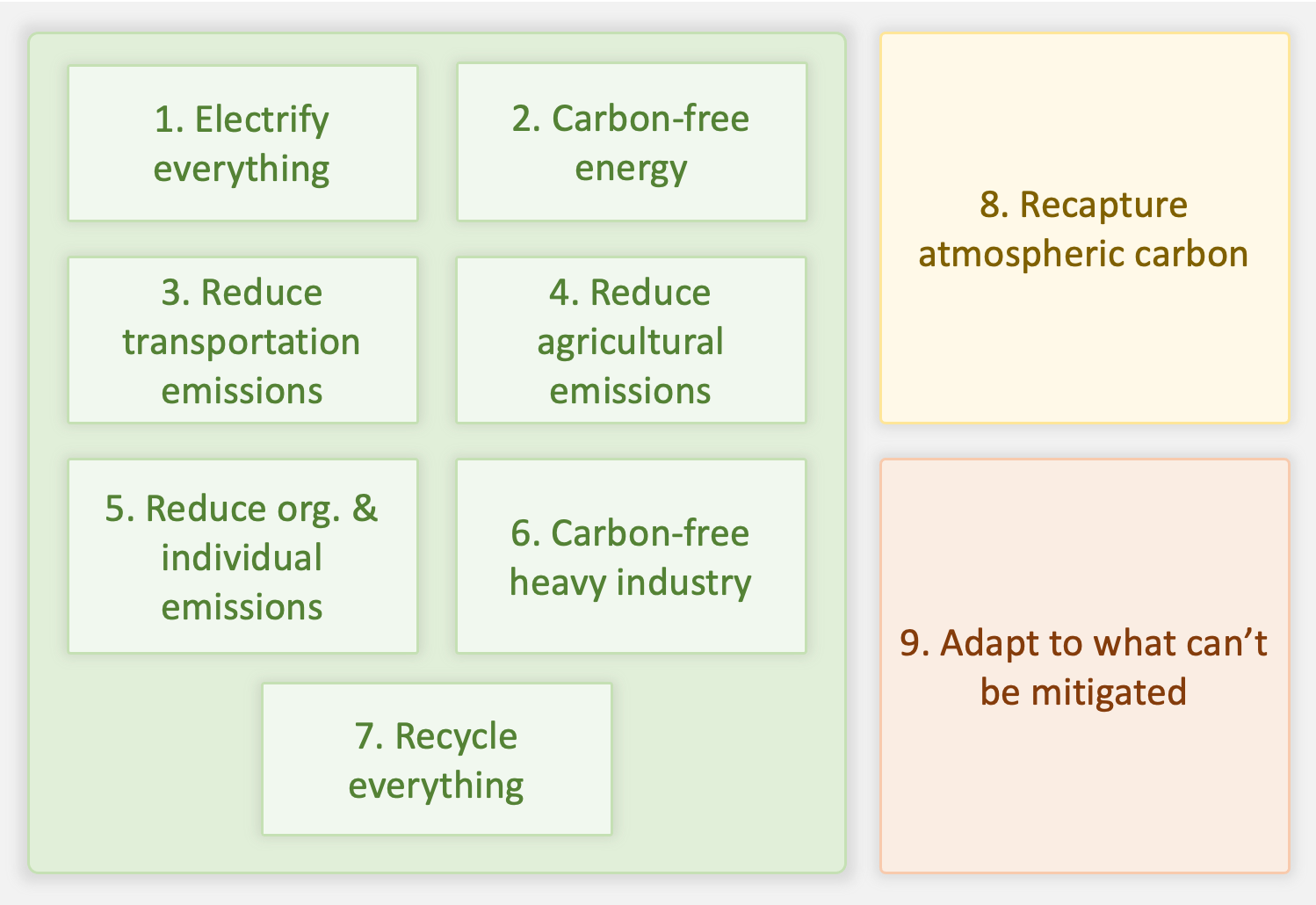
Let’s take a look at the nine themes that make this up. We have seven approaches to reducing emissions; the remaining two themes cover extracting carbon we can’t avoid emitting (or have already emitted), and adapting to the consequences of the changing climate.
Electrify everything possible and update the grid
Electrify household appliances (boilers, stoves, heating). Electrify vehicles (cars and trucks). Enable the grid to operate more intelligently, enabling distributed power generation, treating electric vehicles as sources of power, and intelligently reducing power usage in one area to avoid generating it in another. Much more electricity will be needed, but much less fuel will need to be extracted and moved around the world.
Move to a carbon-free energy mix
The cost of solar and wind power has plummeted and will drop further, and new options are becoming available such as micro hydro and advanced geothermal.
Reduce transportation emissions
It may be possible to electrify all forms of transport, but other low emission options are becoming available, such as SAF (sustainable aviation fuel), or hydrogen planes and boats.
Reduce agricultural emissions and optimize land-use
Reducing waste, improving crop yield, and new options like vertical farming will help us to use less land for farming, enabling us to use it for carbon-capturing alternatives like forests and wetlands. Regenerative agriculture will allow us to use less carbon (in fertilizer) for farming while preserving biodiversity and diet diversity. Synthetic biology and other ways to shift away from eating meat will help us use less land for livestock. Restoring wetlands and forests, preventing deforestation, and other nature-based solutions will capture more carbon and restore ecosystems.
Reduce emissions controlled by organizations and individuals
Although most actual emissions come from fossil fuels and heavy industry, individuals have control over their purchasing choices that can influence those emitters. Corporate carbon accounting can influence supply chains. Individuals can control their home emissions, choice of bank (banks finance fossil fuel companies), travel and more.
Develop carbon-free heavy industry
The other primary use of energy on the planet is for heat, so we need develop sources of carbon-free heat. Most of modern society is based on concrete and steel, both intensive emitters of carbon, so we need to develop carbon-free alternatives and processes.
Recycle everything possible
The vast majority of our waste is still not recycled. We need to do more to encourage recycling of materials that can already be recycled, and find new ways to recycle rare or difficult-to-extract materials. We need to design recycling into our clothes and devices and build a ‘circular economy’.
Recapture atmospheric carbon
The scientific consensus is that it will no longer be possible to keep temperatures less than 1.5C above pre-industrial levels without extracting carbon from the atmosphere. Many nature-based solutions are available, including reforestation, preventing deforestation, and restoring wetlands. We also need to develop a portfolio of technological solutions, including DAC (Direct Air Capture), BECCS (Bioenergy with Carbon Capture and Storage), and we need to find ways to store the captured carbon so it does not just delay the problem.
Adapt to what can’t be mitigated
Some of the early impacts of climate change are already here, and further temperature rise is unavoidable since we are still emitting CO2. There is also deep concern that rising temperatures will lead to ‘tipping points’ which will lead to irreversible impacts, such as melting polar ice and changing sea currents. Technology can help with early warning systems, impact modeling, risk management and more.
Some notes on the choice of themes
First, this is organized into 'themes' rather than end-use sectors or activity sectors. Themes tell a story and make the goal clearer, which in turn makes the impact of achieving that goal more easily quantifiable than a drier segment definition such as 'buildings'. At the same time, themes do tend to predetermine approach (eg 'electrify everything'). Themes also tend to overlap (EVs are an example of ‘electrifying everything’ but also of ‘reducing transportation emissions’).
Second, the themes here include all the ideas and activities I have so far run into. Being comprehensive is important; no good idea should be left behind! Several of the really good segmentations I ran into exclude certain categories of activity entirely.
Third, this is a manageable number of themes, and it's easier to focus on a single list of ideas than a matrix.
Finally, it is relatively straightforward to quantify these themes and understand the impact of opportunities within them - my most important goal. Industry-based classifications can be easier to map to groups of companies, but harder to quantify in terms of impact.
In future articles, I plan to dig into aspects of these themes, identifying challenges, opportunities and approaches. Coming up next: the smart grid and electrification!
Great post. I really like the survey of existing frameworks and then your own framework against that background. One area that is not on most people's climate radar is Oceans. Check out BlueMarineFoundation: bluemarinefoundation.com for a lot of information about this. The idea is that by letting the oceans recover, we automatically increase the world's largest carbon sink.
This is an excellent way to look at the scope of climate Jonathan, thank you for breaking down your insights into this digestible format. I agree, there are so many players trying to segment the problems and solutions, that it can get pretty murky when you're trying to figure out where you fit in, and how you might be able to affect change. I'm looking forward to the deeper dives into each of these topics. You certainly have your work cut out, thank you for taking it on and helping the rest of us make sense of it.